

A Legacy of Sustainable Design: Reflecting On The Maroochy Arts and Ecology Centre 15 Years On
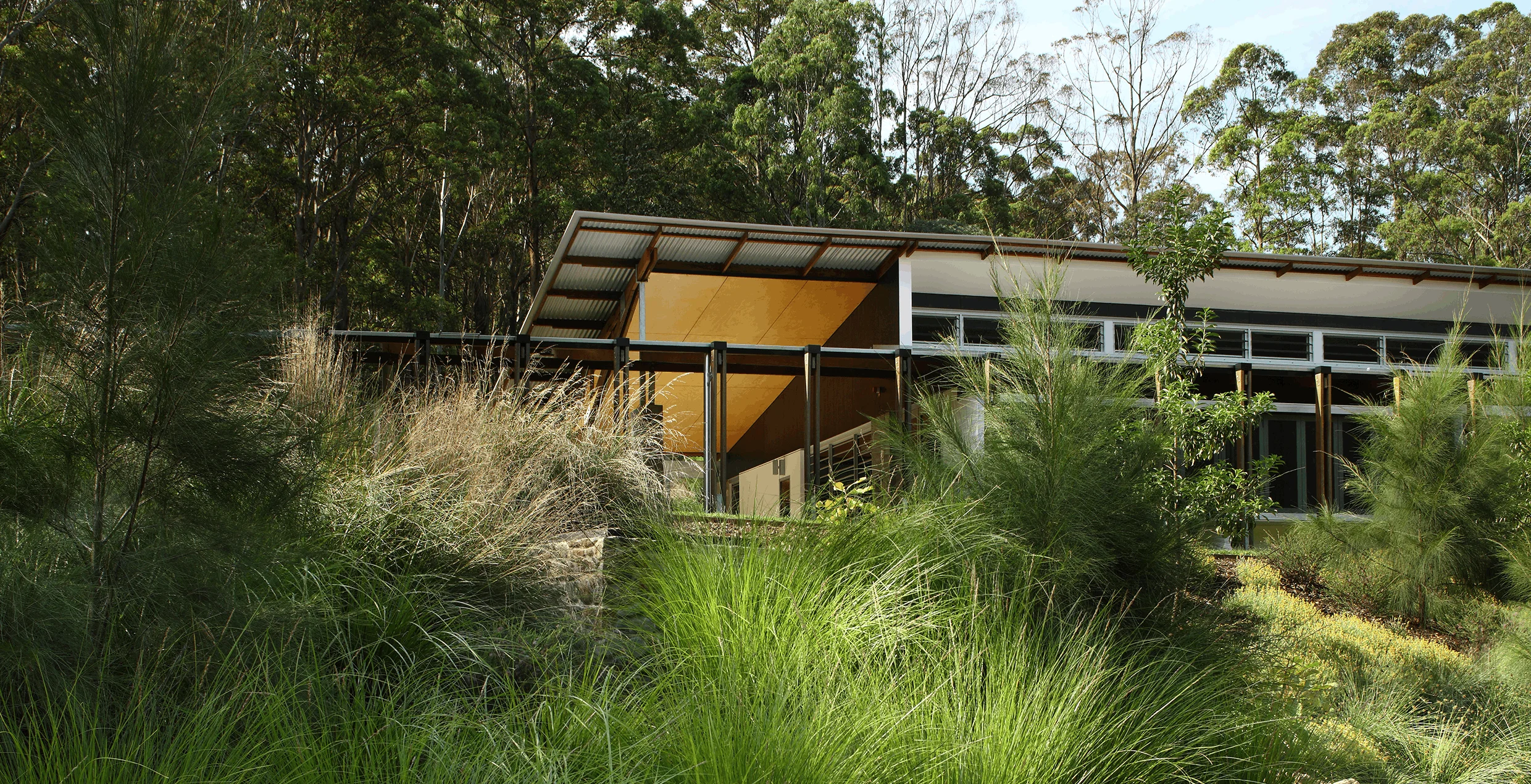
Fifteen years ago, our team at GB-A embarked on a project that would come to define our core philosophy. The Maroochy Arts and Ecology Centre was more than a brief; it was a challenge to create a building that could teach, inspire, and seamlessly merge with its natural surroundings.
Our vision for the Centre, located in the Maroochy Regional Bushland Botanic Gardens, was ambitious. We didn’t just want to design a gathering and educational space for the community and a functional space for the Sunshine Coast Council and Friends of the Garden. We wanted to create a living case study in sustainability, a structure that would actively demonstrate how architecture can coexist with and even enhance the local ecology to inspire the local community to adopt similar principles in their own lives.
Looking back, we can see how the principles we embedded in the Centre’s design have become more relevant than ever. This anniversary offers a perfect moment to share our reflections on the vision, the challenges, and the enduring legacy of a building we are proud to have brought to life.
Designing With Environmental and Cultural Sensitivity
The Arts and Ecology Centre was created as an educational experience and as a means for people to enjoy the cultural elements and natural features of the Botanic Gardens. From the very beginning, our design process was guided by a deep respect for the land. Situated on the traditional lands of the Gubbi Gubbi people, the project demanded a thoughtful approach that honoured the site’s rich physical, social, and cultural context.
Set in remnant subtropical bushland, we made a critical decision early on to build on a previously cleared section of the gardens. This choice was fundamental to our commitment to minimising ecological disturbance and preserving the integrity of the surrounding bushland.
A Material Palette Drawn from the Earth
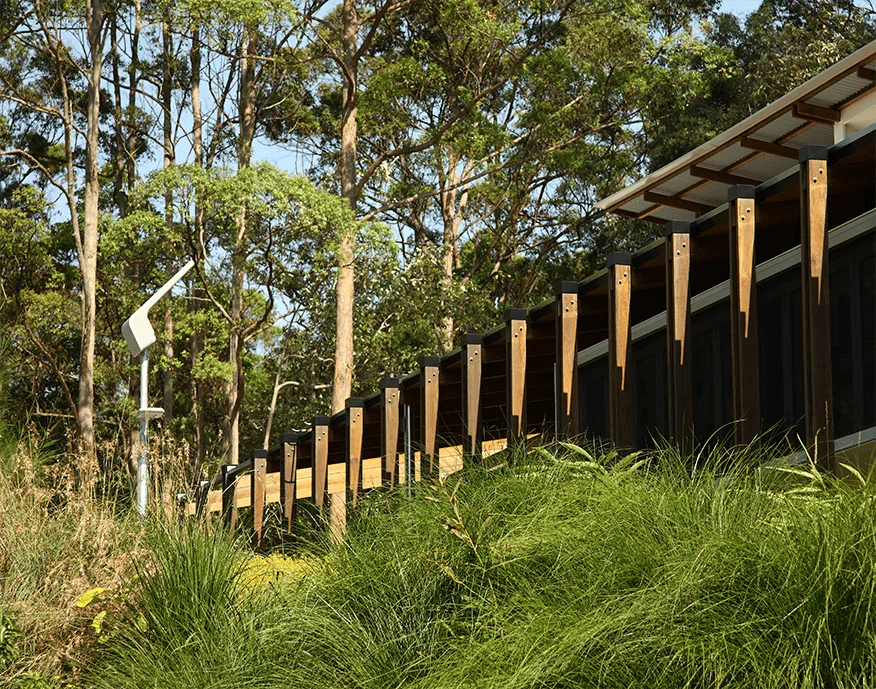
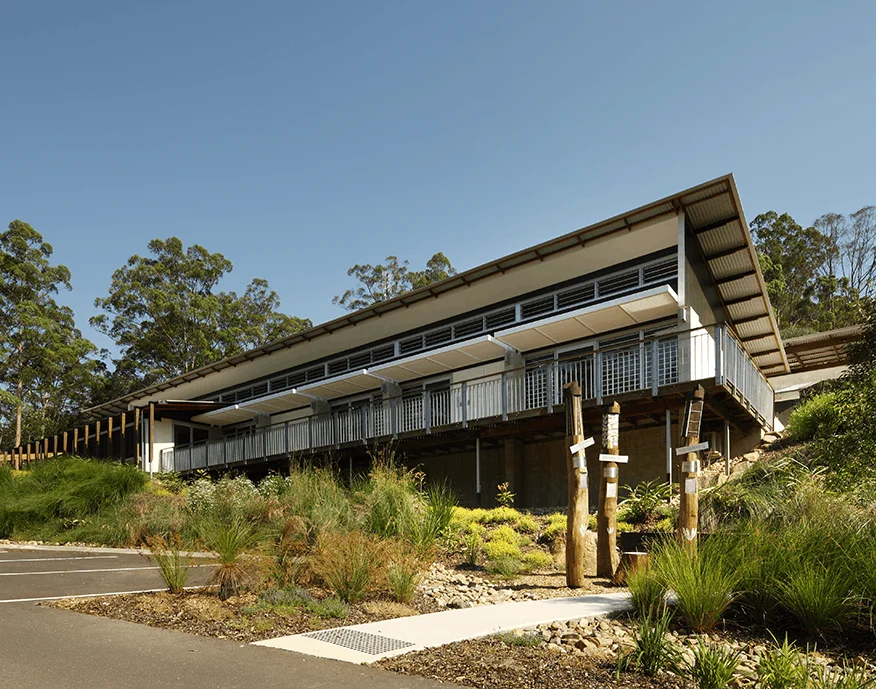
To ensure the building felt like a natural extension of the botanic gardens, we selected a simple structure featuring raw and highly durable materials. We chose block work, steel, high-durability timber, and plywood cladding not only for their long-term longevity but for their unique ability to blend seamlessly with the landscape.
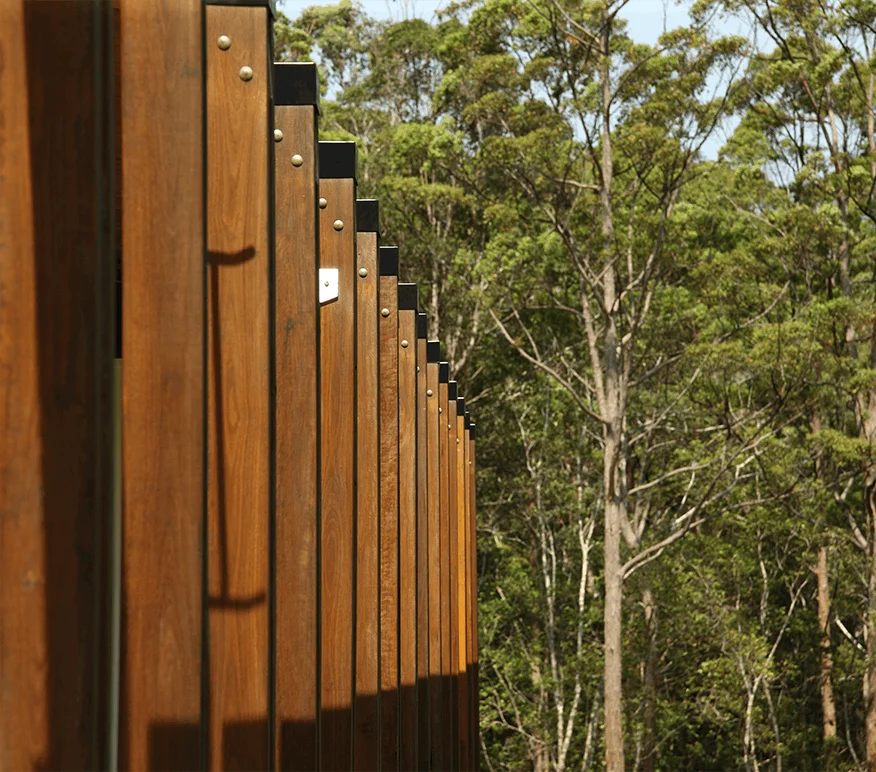
A defining feature of this architectural integration is the structural grid itself. We specifically designed the grid to mimic the straight, vertical trunks of the tall trees surrounding the site. This establishes a natural rhythm throughout the space, allowing the building to stand proudly alongside the forest rather than fighting against it. When you look at the vertical lines of the structure, they echo the timber of the forest, creating visual harmony.
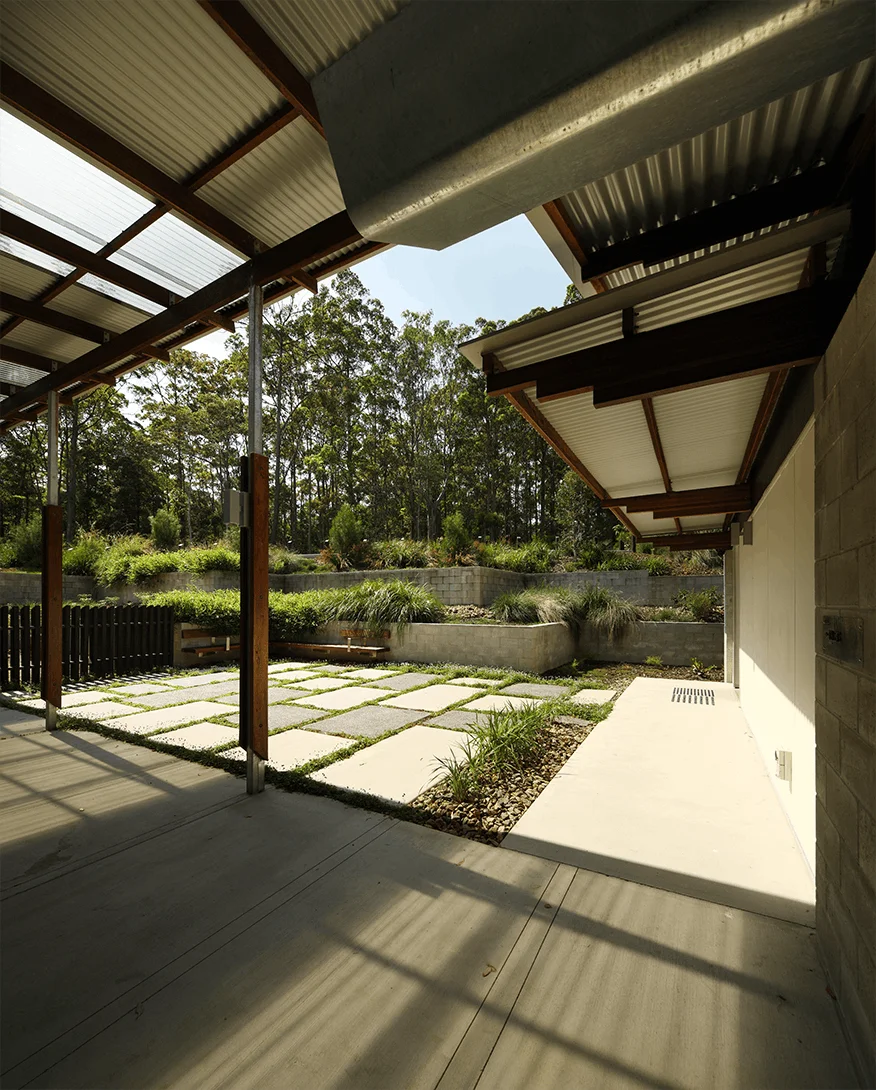
Through an integrated design approach, we designed the interior and exterior spaces to create a continuous, unbroken flow. Courtyards merge organically into the gardens, bordered by natural walls and lush native plantings. This intentional blurring of boundaries ensures that visitors always feel directly connected to the environment. Whether inside or outside, the design reinforces the Centre’s core ecological message with every step.
Standardising to Reduce Construction Waste
To reduce waste during the building phase we standardised components and structural grids. Designing the building around standard material dimensions minimised the need to cut materials on-site and prevented off-cuts from ending up in local landfill.
Standardising the grids also streamlined the entire construction process. It made the build faster and more efficient while significantly lowering the overall embodied energy of the project. Standard parts would also make future maintenance, repairs, and expansions easier to manage over the building’s lifespan.
Weaving Passive and Active Systems Together
A core principle of our design philosophy is that buildings should work intelligently with their environment. We achieved this at the Arts and Ecology Centre by weaving together passive design strategies with active technological systems, turning the building into a highly transparent showcase of sustainable living.
Harnessing Nature with Passive Design
Passive design serves as the building’s first line of defence against energy inefficiency. We carefully oriented the structure to harness natural sunlight and capture the prevailing breezes of the region. By aligning the building precisely with the sun’s path and local wind patterns, we significantly reduced the reliance on artificial lighting and air conditioning. This creates a comfortable, natural experience where the architecture breathes with the landscape around it.
Visible Active Systems and Climate Control
To take energy efficiency a crucial step further, we integrated advanced solar power, intelligent air management, and water-saving technologies. Instead of hiding these features behind walls or panels, we made them highly visible to the public. We wanted to demystify sustainability and allow visitors to witness resource management in real time.
One of the most exciting features of the Centre is the intelligent climate control. We implemented an innovative, automated traffic light system linked directly to an on-site weather station. Depending on real-time weather readings, the building transitions through three distinct stages of climate control:
Passive Stage: The system naturally opens louvers and windows to let in fresh air and regulate the temperature.
Intermediate Stage: The system activates energy-efficient ceiling fans to circulate the air when ambient temperatures begin to rise.
Advanced Stage: The system closes all windows and engages the air-conditioning only during periods of extreme heat or humidity.
This tiered approach ensures high-energy cooling is used only when absolutely necessary. The success and visible learnings of this system later inspired similar installations at the Northshore Community Centre, Kimberley College, and the Mary Cairncross Scenic Reserve Rainforest Discovery Centre.
Celebrating Every Drop with Smart Water Management
Water remains a precious resource, and both the architecture and the landscape design of the Centre celebrate its collection, filtration, and reuse.
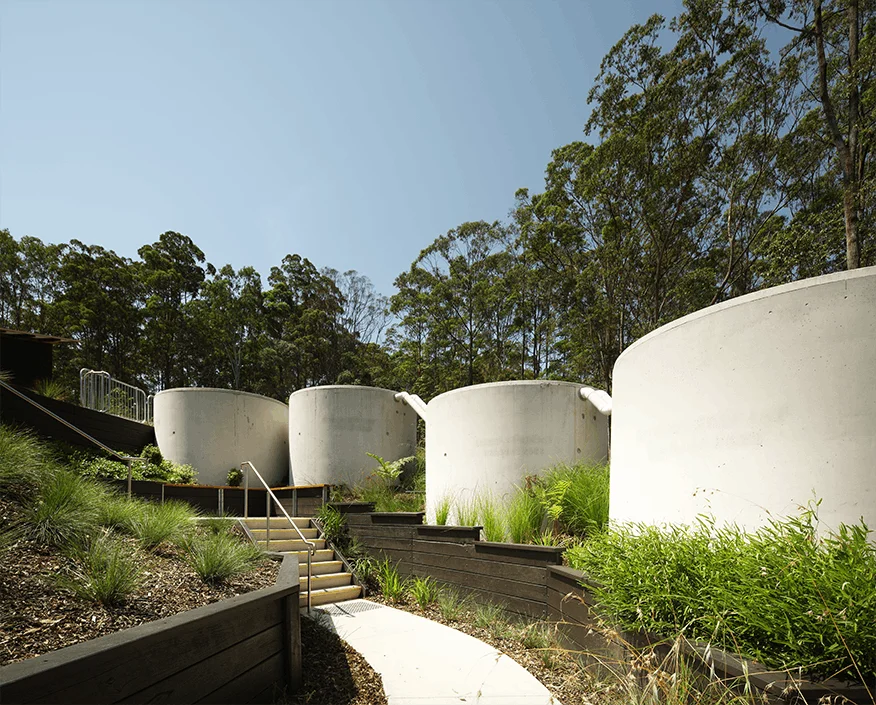
A massive, highly visible gutter features prominently on the eave of the building. It actively collects rainwater and channels it into a gravity-fed tank system. We designed this gutter as a featured architectural element to raise public awareness about sustainable water design. During large rain events, this gutter safely overflows into a carefully designed network of on-site ponds. Four 23,000L water tanks store the collected roof water, which are treated with UV filters and used for flushing toilets and site maintenance, or public drinking water.
The landscape design built on this with overland flow paths accurately simulating natural creek systems, guiding water thoughtfully across the site. Wetland planting and bio-retention basins naturally filter the stormwater runoff before it enters the ecosystem.
Over 90 species of endemic flora provided essential habitats for local wildlife and promoted favourable micro-climatic conditions. These hardy, drought-resistant native plants ensured lush growth without the need for permanent, water-heavy irrigation. At the heart of the exterior design sits a beautiful water garden, centred around a decorative pond constructed using reclaimed basalt boulders gathered directly from the site itself.
Challenges and Rewards of Pioneering Design
Designing a building like this 15 years ago came with unique challenges. The concepts of transparent energy monitoring and fully integrated passive design were not as mainstream as they are today. It required a client like the Sunshine Coast Council who had exceptional foresight. The process demanded a higher level of collaboration and a willingness to explore new territory.
The project was recognised shortly after completion. In 2012, the Centre won the Queensland Master Builders Award for Innovation in Environmental Management and was a finalist for the Queensland Excellence in Sustainability Award. These accolades were a powerful validation of the design approach, confirming that ambitious sustainable design could be both practical and award-winning.
A Lasting Impact on Community and Design
Over the past 15 years, the Maroochy Arts and Ecology Centre has become a cornerstone of the community. It hosts workshops, art exhibitions, and conferences, all within a space that embodies a message of responsible living.
More importantly, it has served its primary purpose: to inspire. We have heard countless stories of visitors leaving with a new understanding of sustainability. The building’s design prompts positive attitudes and encourages people to consider their own resource use. It also serves as a home for the dedicated volunteers who maintain the gardens, fostering a powerful cycle of community engagement and environmental stewardship.
Our Philosophy: Designing for a Sustainable Future
The principles we pioneered at the Maroochy Arts and Ecology Centre continue to be the foundation of our work at GB-A. Our design process always considers the physical, social, and cultural context of a project. We believe that great design should inspire positive behaviours and communicate the values of society.
As we look toward the next 15 years, the lessons from this project are more critical than ever. We face global challenges that demand creative, scientifically rigorous, and holistic solutions. The Maroochy Arts and Ecology Centre stands as a testament to the fact that we can create built environments that are conscientious of the natural world. It proves that financial, cultural, and environmental sustainability can be successfully balanced.
We are immensely proud of the Maroochy Arts and Ecology Centre and its enduring legacy. It remains a benchmark for our practice and a source of inspiration, reminding us that with a clear vision and a commitment to innovation, architecture and landscape architecture can indeed help shape a better, more sustainable future for all.
UP NEXT
