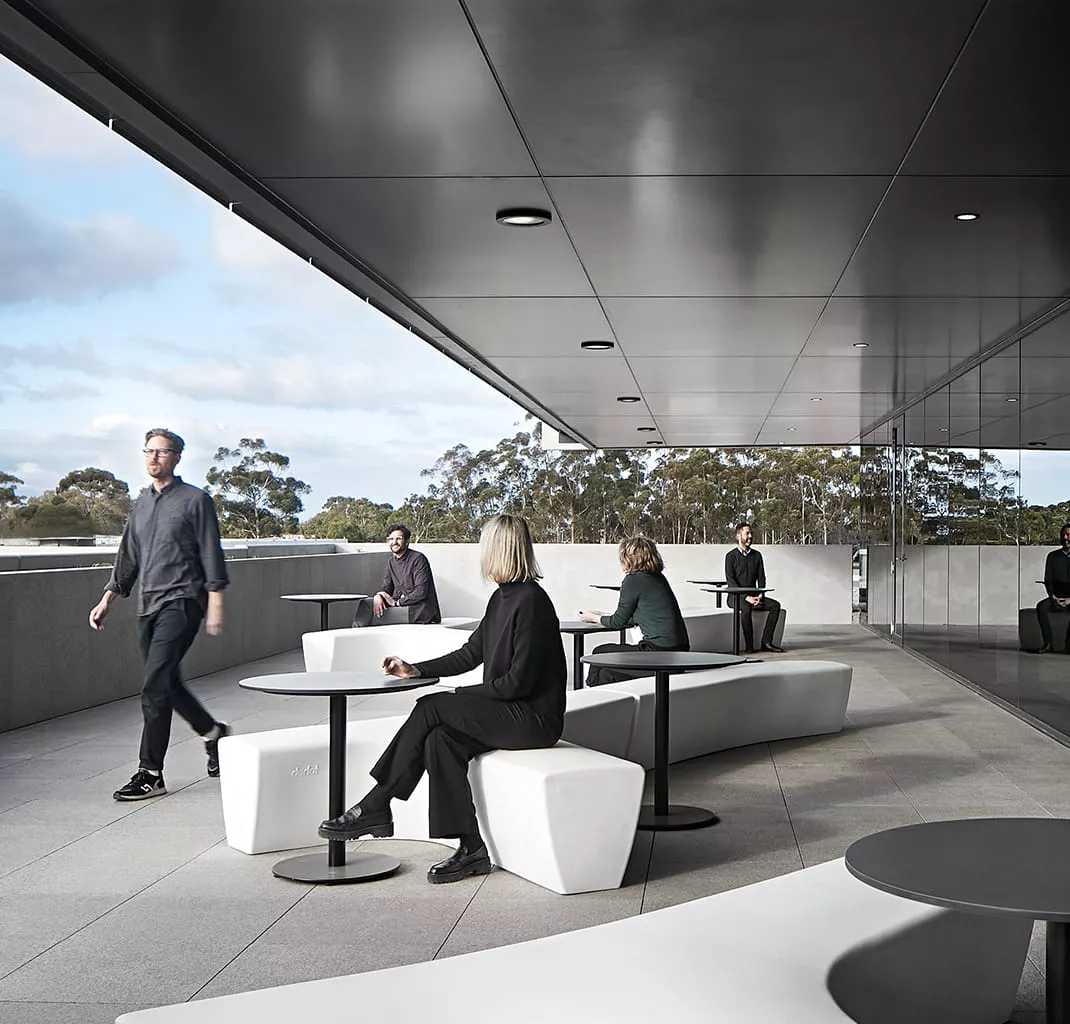
Justice environments play a critical role in supporting safety, civic function, and community confidence. Courts and police facilities provide structured, secure settings where clarity of process, dignity, and public interface are essential to effective outcomes.
Recognising that these environments must balance security with accessibility and service, we approach the design of courts and police facilities to support operational efficiency, safety, and user experience. From courthouses to police stations, these spaces shape how justice is experienced—promoting clarity, reinforcing trust, and supporting the people who use them every day.
Designing safe, secure, and functional justice environments
GB-A is widely recognised as the leading secure facility designer in Australia and one of the leading secure facility design firms globally. Our knowledge and expertise has been acquired through extensive project experience having designed more than 40 court projects, over 330 correctional projects, and over 15 police facilities with project values up to $1billion.
Over the last 35 years GB-A has been the lead design consultant on some of Australia’s most forward-thinking, rehabilitative-focused justice and correctional projects, many of which have become the benchmark for their project type.
Through evidence-based research and close collaboration with justice operators, we translate insights into practical, high-performing environments. This has enabled us to successfully deliver a wide range of justice projects. We do this by:
Applying User-Centred Design
We prioritise user-centred, co-design approaches that respect the human aspects of justice environments. Our designs balance civic function with community value, creating spaces that are both purposeful and welcoming.
Prioritising Safety & Security
With safety and security paramount, we carefully plan movement paths and access for all users. Our designs separate circulation for judges, people in custody, witnesses, and the public, while supporting safe staff movement.
Prioritising Cultural Needs
Through meaningful engagement with First Nations stakeholders, we ensure designs respond to cultural needs and practices. This includes incorporating culturally appropriate spaces and adapting technical elements to support cultural ceremonies.
Multi-Functional Courtroom Spaces
We design flexible courtroom environments that can adapt to changing needs. Our solutions enable spaces to transition between court, meeting, and virtual functions, supported by integrated storage and technology for safe, efficient use.
Creating Clear, Legible Environments
Clarity and orientation are critical in complex justice facilities. We design intuitive layouts with clear sightlines and zoning to support safe movement, operational efficiency, and reduced stress for occupants and staff.
Designing for Durability and Long-Term Performance
Justice environments are highly demanding and require robust solutions. We use durable materials and thoughtful detailing to withstand intensive use while reducing maintenance and ensuring longevity.
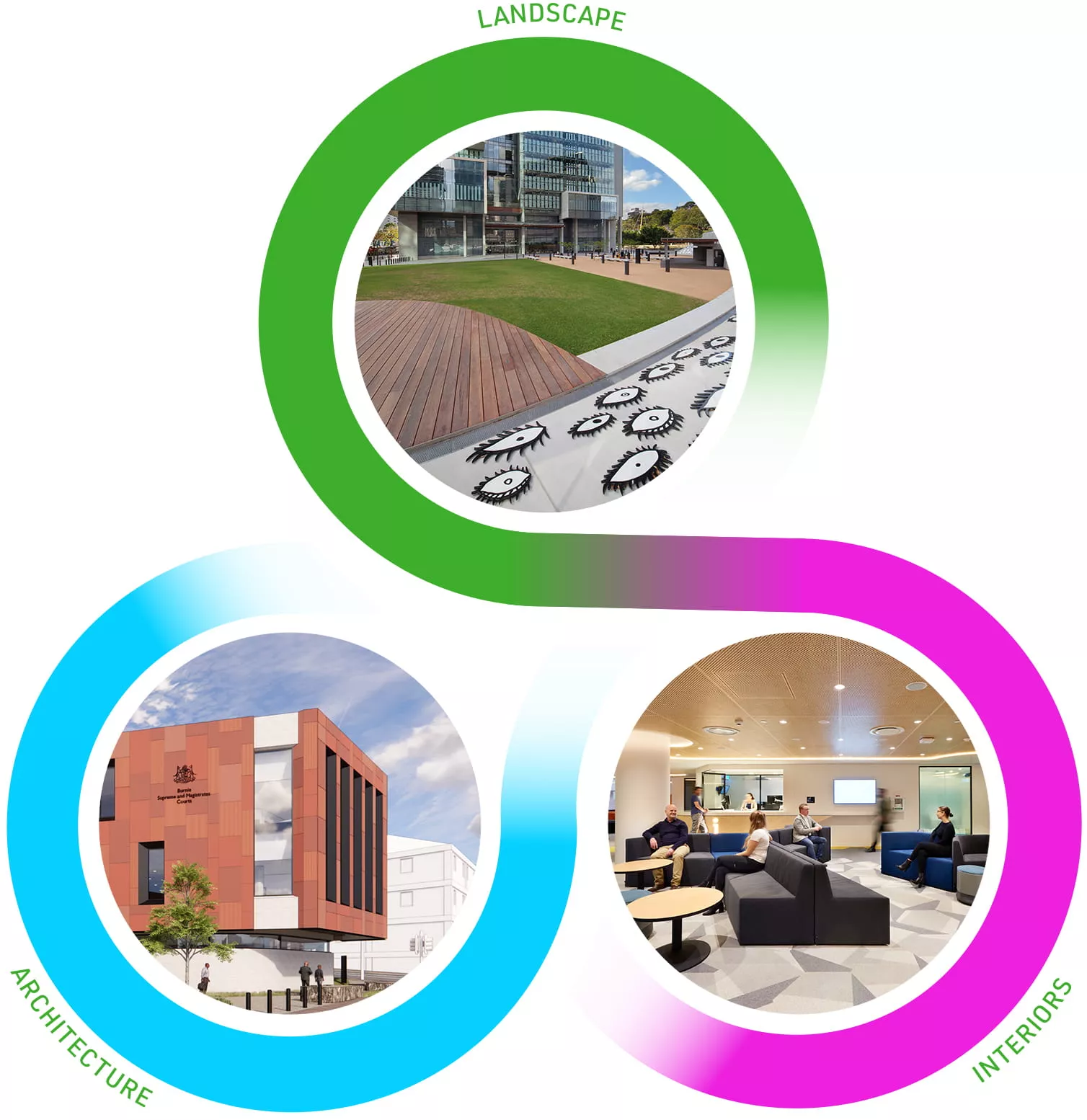
At GB‑A, we believe the most successful justice environments are created when
architecture,
landscape architecture, and
interior design
work seamlessly together. By integrating these disciplines, we create cohesive environments that are secure, functional, and supportive of wellbeing.
Our approach focuses on creating clear relationships between built form, outdoor space, and internal environments, ensuring spaces feel connected, reduce institutional character, and contribute positively to user experience.
Need a justice environment that is secure and functional?
Let GB‑A help you create justice environments that support safety, dignity, and positive outcomes. With decades of experience and a commitment to evidence-based design, we deliver solutions that benefit individuals, operations, and the broader community.
Contact us today on (07) 3870 9700 (Brisbane) or (03) 8547 5000 (Melbourne) to find out how we Generate Better design outcomes.