

Thoughtful interior design can shape our daily experiences, influencing everything from our mood to our productivity. But for individuals living with dementia, the built environment plays a much more critical role — it can either be a source of confusion and risk or a foundation for safety, dignity, and independence.
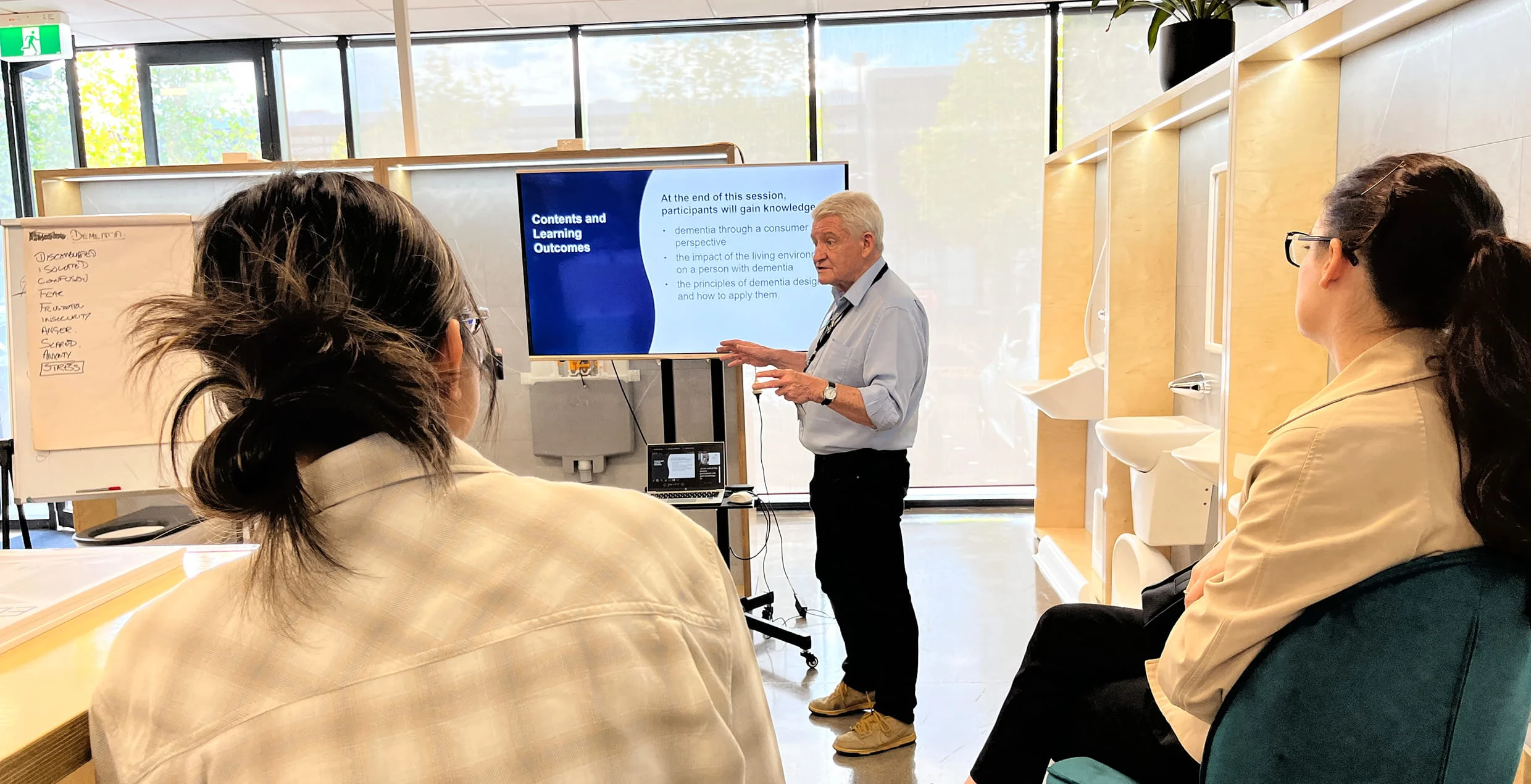
To deepen our understanding of this, our Interiors team recently participated in Dementia Australia’s “Enabling EDIE: Virtual Reality Dementia Experience” training. It was a powerful, eye-opening session that reinforced why empathetic design is not just a goal, but a necessity.
The training allowed our designers to step directly into the world of someone living with dementia, gaining invaluable, first-hand insights. We’re sharing our key takeaways from this transformative experience and how it will continue to shape our commitment to creating spaces that are not only beautiful but truly inclusive.
Seeing Through New Eyes: The EDIE Experience
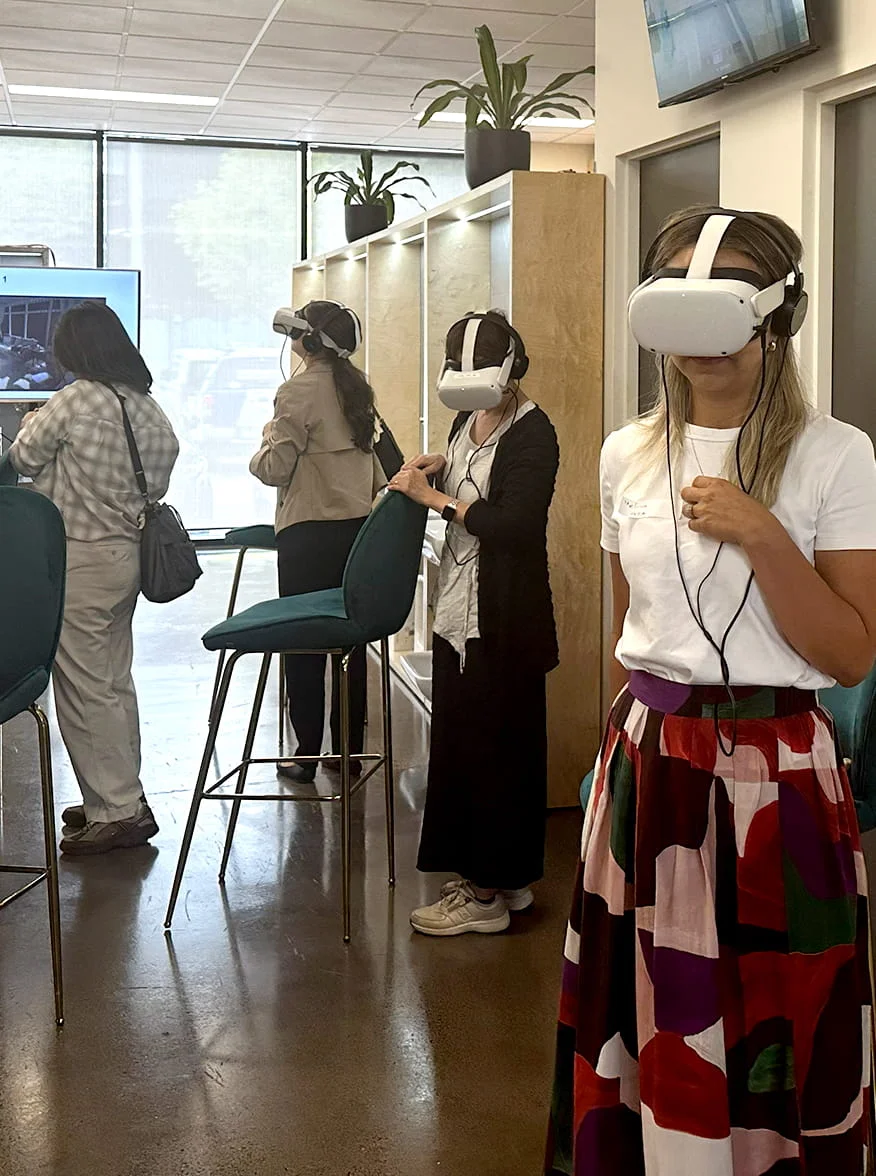
The Enabling EDIE program uses virtual reality to simulate the challenges a person with dementia might face in their own home. It moves far beyond traditional presentations or checklists into something deeply interactive and experiential.
By putting on the VR headset, our interior designers were no longer only observing; they were experiencing the environment as Edie, a person living with dementia.
This gamified approach to learning was exceptionally effective. Mundane household objects and familiar layouts suddenly became confusing or even intimidating. The simulation made it clear how sensory changes can alter perception, turning a simple walk to the bathroom into a disorienting journey. This immersive perspective provided a tangible understanding of how crucial thoughtful design is.
A Deeper Level of Empathy
A standout element of the training was the use of Galvin Engineering’s simulation suit. This specially designed suit mimics some of the physical limitations that can accompany ageing and certain health conditions. It adds weight and restricts movement, making the virtual experience even more profound.
Wearing the suit and navigating Edie’s world made the lived experience tangible. It was a powerful reminder that design must consider the whole person — their physical abilities, their sensory perceptions, and their emotional needs. This physical and virtual immersion created a level of empathy that simply cannot be achieved by reading a textbook. It highlighted the enormous responsibility we, as designers, have to create environments that empower rather than hinder.
Key Principles of Dementia-Friendly Design
The EDIE experience brought several core principles of dementia-friendly design into sharp focus. These are not just abstract concepts but practical strategies that can dramatically improve quality of life.
1. The Power of Contrast and Colour
One of the most immediate takeaways was the importance of colour and contrast. In the simulation, a white toilet in a room with white walls and a white floor became nearly invisible. This lack of visual distinction can create confusion and increase the risk of falls.
Applying strong, clear colour contrast between walls, floors, doors, and key fixtures like toilets and light switches provides essential visual cues. This simple design choice helps individuals orient themselves, identify important elements in a room, and navigate their surroundings with greater confidence.
2. Reducing Sensory Overload
Modern design often favours busy patterns, reflective surfaces, and complex layouts. For a person with dementia, these elements can be overwhelming. A polished floor might appear wet and slippery, while a heavily patterned rug can look like a collection of objects or a hole to be avoided.
Dementia-friendly design prioritises simplicity and clarity.
This means opting for non-reflective, matte finishes, using solid colours or simple patterns, and ensuring layouts are logical and easy to navigate. Minimising auditory clutter by incorporating sound-absorbing materials is also crucial for creating a calm and reassuring atmosphere.
3. Promoting Familiarity and Wayfinding
The simulation illustrated how memory loss can make even the most familiar environment feel alien. Design can play a vital role in aiding memory and orientation. This can be achieved by incorporating familiar objects, personal mementos, and clear signage.
For example, using a picture of a toilet on the bathroom door is more effective than the word “Toilet”. Creating clear lines of sight to key destinations, such as the bedroom or kitchen, helps individuals move through their space with a sense of purpose and security.
Designing to Empower Confidence
Ultimately, the goal of dementia-friendly design is to empower individuals to live with confidence for as long as possible. The EDIE training provided actionable strategies to achieve this.
Thoughtful design reduces anxiety by creating predictable, easy-to-understand environments. When a person feels safe and capable in their surroundings, their sense of independence is bolstered. This might involve ensuring adequate, non-glare lighting to prevent shadows that can be misinterpreted or installing lever-style door handles and taps that are easier to operate than round knobs.
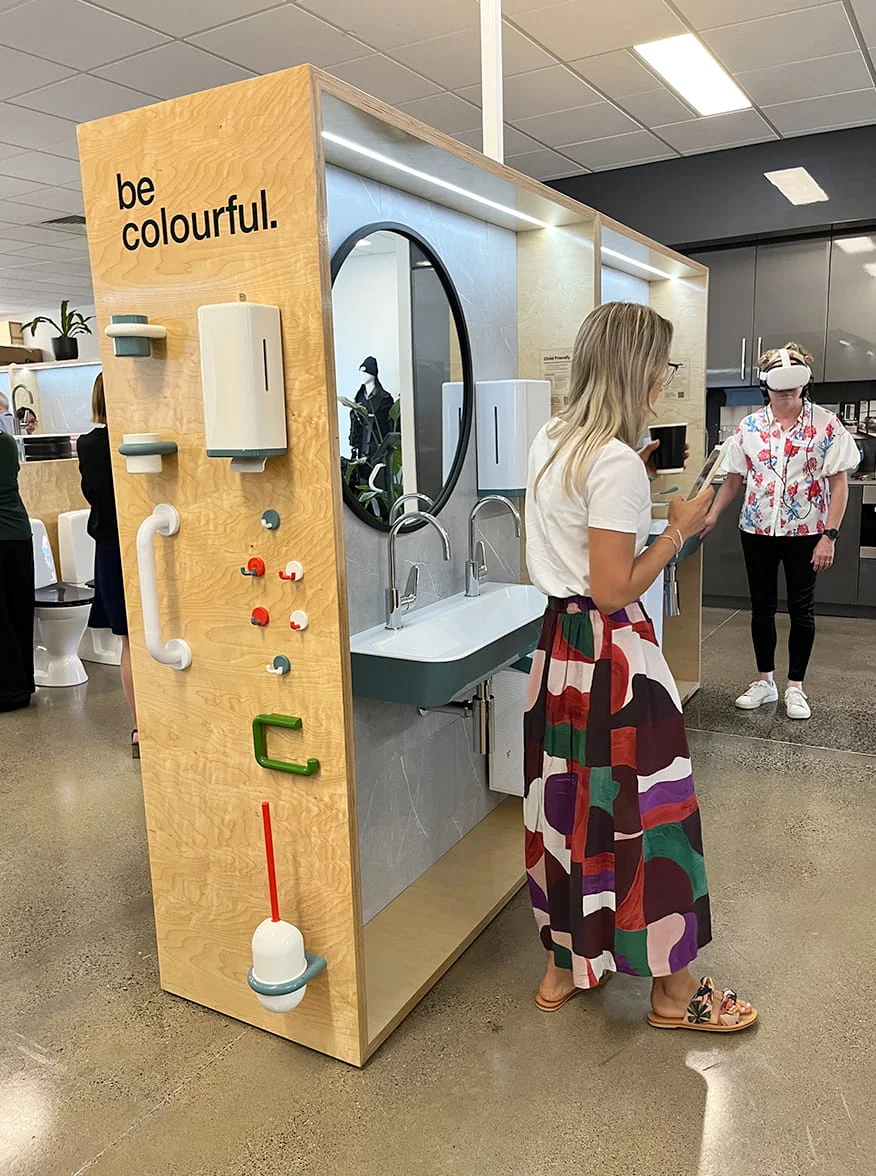
Every design decision, no matter how small, can contribute to a person’s dignity. By focusing on creating spaces that support, rather than challenge, we can help individuals maintain their routines, engage with their surroundings, and preserve their sense of self.
Our Commitment to Inclusive Design
Participating in the Enabling EDIE training was more than just a professional development exercise; it was a profound reminder of the human impact of our work. The experience has deepened our team’s commitment to placing empathy at the forefront of every project.
Understanding the world from another’s perspective is the first step toward creating truly inclusive spaces. The insights gained will inform our approach to projects across all sectors, from aged care facilities to public spaces and residential homes. We believe that great design is design for everyone, and we are grateful for experiences like this that challenge us, educate us, and ultimately make us better designers.
GB-A would like to extend our heartfelt thanks to Galvin Engineering for their invaluable involvement in organising this impactful training session for our Interiors team.
UP NEXT
