


A current Sunshine Coast project has brought our Landscape Architecture and Architecture teams into a closer conversation about the Wallum landscape, one of South East Queensland's most distinctive coastal heathland ecosystems.
Through a series of site walks and shared exploration, the project has helped both disciplines develop a deeper understanding of place, ecology and planting, highlighting how the selection of native, indigenous and endemic plant species can shape biodiversity, resilience and a stronger through place-responsive design.
Rather than treating the Wallum as a visual reference or a list of plants, the project has encouraged both teams to explore it as a living landscape system. That exploration has extended beyond the studio. Walks through Kathleen McArthur Conservation Park, Mount Coolum, Emu Mountain and Noosa National Park have allowed the team to encounter Wallum vegetation across different settings and to observe how plant communities shift with landform, exposure, water and disturbance.
Exploring the Sunshine Coast Wallum Landscape Firsthand
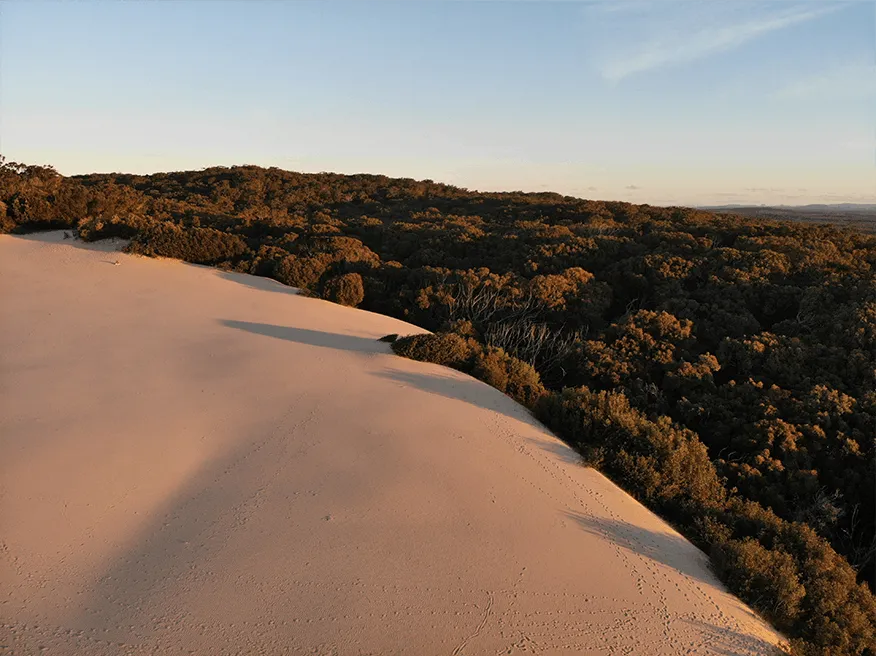
Moving through these landscapes has helped the team see the Wallum not as one uniform vegetation type, but as a changing mosaic. Open woodland gives way to low heath, wetter depressions support sedges and paperbarks, and subtle changes in elevation can produce noticeable changes in vegetation structure. The experience of walking through these transitions has made the relationships between plants and site conditions more legible.
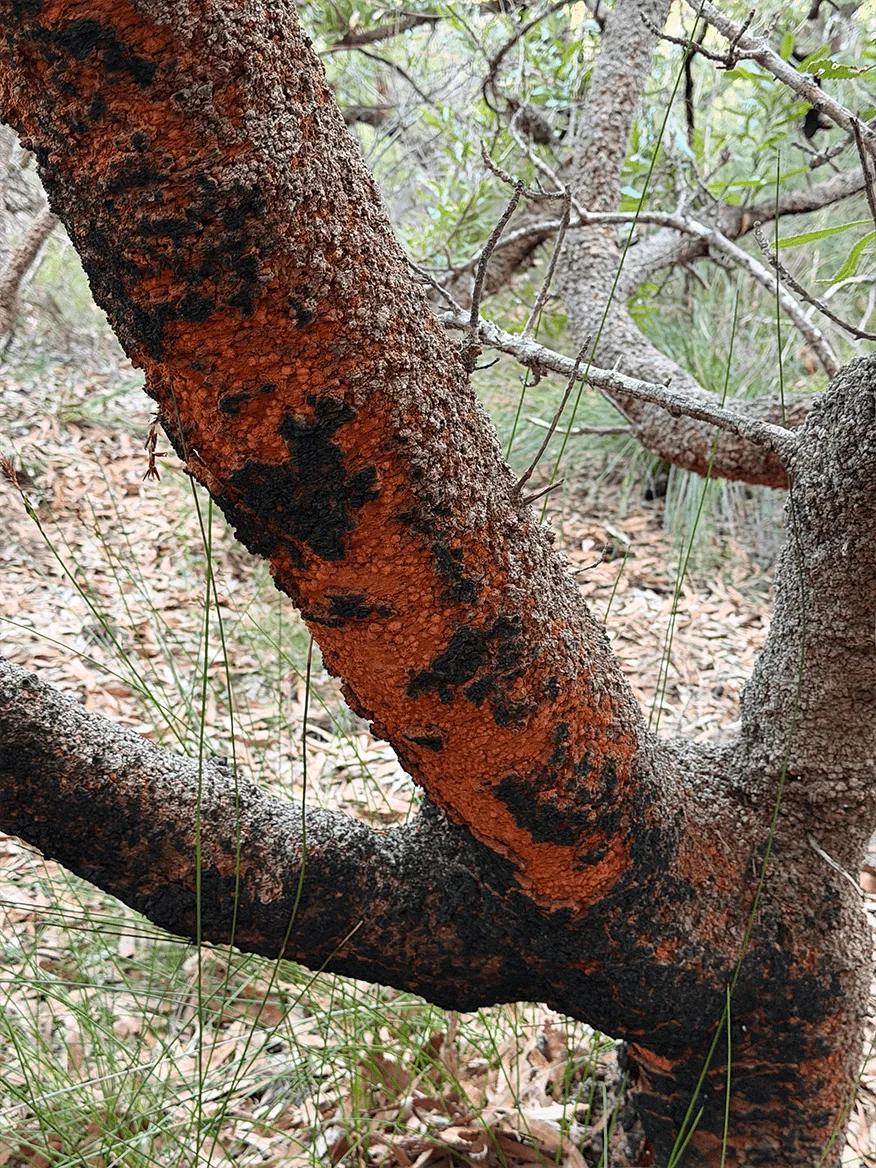
The exploration has also drawn attention to the character of the landscape at different scales. At a distance, the Wallum can read as broad, low and windswept. Up close, it reveals fine textures, layered foliage, seasonal flowers, sculptural trunks and dense ground-level communities. These observations are influencing conversations around planting composition, materiality, spatial enclosure and how architecture might sit within, rather than apart from, its landscape setting.
Each walk has contributed a different perspective. Kathleen McArthur Conservation Park has supported discussion around coastal heath and wetland relationships. Mount Coolum and Emu Mountain have provided opportunities to consider how vegetation responds to changing topography and exposure. Noosa National Park has broadened the exploration across connected coastal vegetation communities. Together, the walks have built a shared reference point for both disciplines.
How Landscape Architecture and Architecture Respond to Place
For the landscape architecture team, the exploration supports a deeper reading of species associations, planting structure and ecological processes. For the architecture team, it offers a direct understanding of the scale, texture, colour and spatial qualities of the Wallum. Bringing these perspectives together is helping the project move beyond landscape as an element applied around a built structure. Instead, landscape architecture and architecture can be developed through a common response to the same place.
For landscape architects, understanding Wallum ecology helps inform planting design, habitat creation, biodiversity outcomes and long-term landscape resilience, supporting ecologically responsive approach to landscape design. It provides a stronger foundation for creating landscapes that reflect local character rather than relying on generic native planting palettes.
This collaborative process has also raised a simple but important question: when selecting plants, what do we mean by native, indigenous and endemic?
Native, Indigenous and Endemic Plants: What’s the Difference?
Native plants
A native plant occurs naturally somewhere within Australia. Being native does not mean a species belongs in every Australian landscape. Melaleuca quinquenervia (Broad-leaved Paperbark) is a broadly distributed Australian native included in the project’s Melaleuca Woodland palette. Within the local Wallum setting, it may also be indigenous.
Indigenous plants
An indigenous plant is native to a particular local area, region or ecosystem. Banksia aemula (Wallum Banksia) is characteristic of Wallum woodland and coastal heathland. It naturally occurs in the local Wallum landscape but extends beyond the Sunshine Coast, so it is not endemic to the area.
Endemic plants
An endemic plant occurs naturally within a particular geographic area and nowhere else. Allocasuarina emuina (Mt Emu She-oak) is restricted to a small area of South East Queensland. It is therefore endemic to that area, indigenous to its local habitat and native to Australia.
All endemic species are indigenous, and all indigenous species are native. However, not all native species are indigenous, and not all indigenous species are endemic.
Three Plants, Three Levels of Connection
Term
Wallum example
What it demonstrates
Native
Melaleuca quinquenervia
Broad-leaved Paperbark
Broadly distributed in Australia and also part of local Wallum vegetation.
Indigenous
Banksia aemula
Wallum Banksia
Occurs naturally in Wallum landscapes but extends beyond the Sunshine Coast.
Endemic
Allocasuarina emuina
Mt Emu She-oak
Restricted to a small geographic area in South East Queensland and found nowhere else.
Why Native, Indigenous and Endemic Plants Matter in Design
The Wallum exploration has reinforced that a planting palette cannot be understood only through the broad label of Australian native. Plant selection influences biodiversity, habitat, ecological resilience and the identity of place. Understanding where species occur naturally adds another layer of care to the design process, strengthening local biodiversity, habitats and landscape character.
It also changes how the broader project is discussed. The Wallum becomes more than an aesthetic inspiration; it informs a place-responsive design approach grounded in ecology and character of the site. Its vegetation structure, ecological transitions and distinctive species provide a shared framework for considering landscape form, architectural response, material expression and the experience of moving through the site.
For both teams, the value of the walks has been in building a collective understanding through direct observation. Plant schedules and technical references remain important, but time in the landscape reveals relationships that are difficult to understand in isolation. The exploration encourages curiosity, closer collaboration and a more grounded response to the project’s setting.
The aim is not to make a landscape that simply looks like the Wallum. It is to understand the Wallum well enough for the design to respond meaningfully to its ecology, character and sense of place.
Frequently Asked Questions
What is the Wallum landscape?
The Wallum is a distinctive coastal heathland ecosystem found along parts of South East Queensland, characterised by sandy soils, low nutrient conditions and highly adapted plant communities.
What is the difference between native and indigenous plants?
Native plants occur naturally somewhere in Australia, while indigenous plants occur naturally within a specific local area or ecosystem.
What is an endemic plant?
An endemic plant occurs naturally within a particular geographic area and nowhere else in the world.
Why are indigenous plants important in landscape design?
Indigenous plants often have strong ecological relationships with local wildlife, climate and soil conditions, helping support local biodiversity and sense of place.
What plants are found in the Wallum ecosystem?
The Wallum supports a diverse range of plant communities, including heathland species, sedges, paperbarks, banksias and other vegetation adapted to nutrient-poor sandy soils and coastal conditions.
Why is the Wallum ecosystem important?
The Wallum supports unique plant and animal communities and contributes to the biodiversity, ecological resilience and landscape character of South East Queensland’s coastal environments.
How does landscape architecture respond to local ecology?
Landscape architecture responds to local ecology by considering native vegetation communities, habitat values, biodiversity and site conditions. Understanding local ecosystems such as the Wallum helps inform planting design, landscape character and long-term environmental resilience.
About the Author
Callum Simpson is a Graduate Landscape Architect who is passionate about creating landscapes that contribute positively to both people and the environment. His work is informed by an interest in regenerative design, ecological resilience, and the role landscapes can play in strengthening our connection to the land.
UP NEXT