

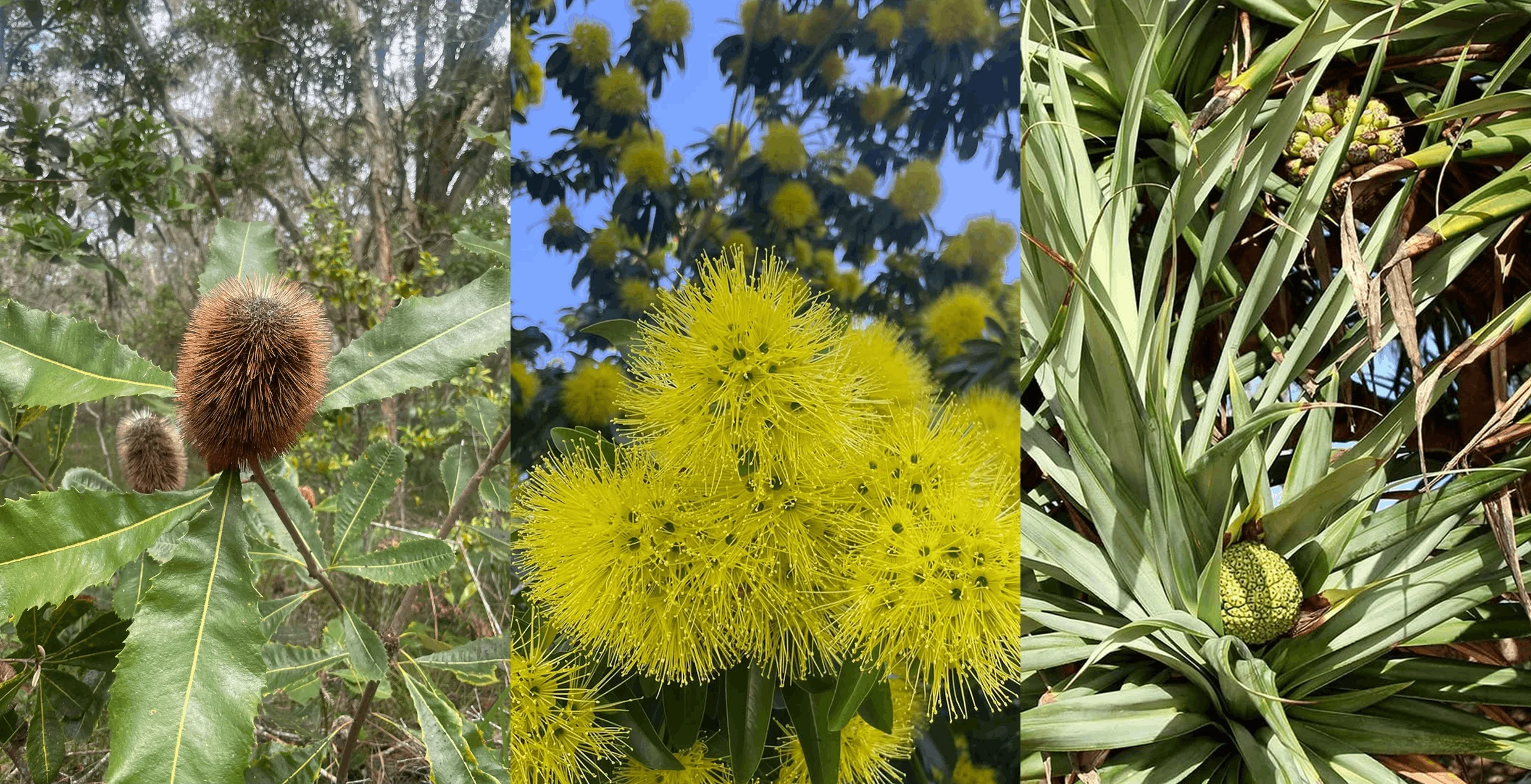
Spotlight on Australian Natives: Our Landscape Architects’ Top Picks (Part 1)
Australian native plants offer incredible resilience, vibrant colours, and vital ecological support. Over the past year, we have highlighted several remarkable species across our social media platforms in a series called Australian Native Spotlight. We received fantastic feedback from our community of plant lovers and design enthusiasts.
Now, we are bringing those insights together in one comprehensive guide. Our landscape architects have curated a selection of their absolute favourite native plants to feature in this first instalment. You will learn about the unique characteristics of each plant, their specific ecological benefits, and how you can apply them to your own landscape projects.
Whether you want to attract local wildlife, stabilise a coastal bank, or simply add a splash of colour to your garden, these native species deliver outstanding results.
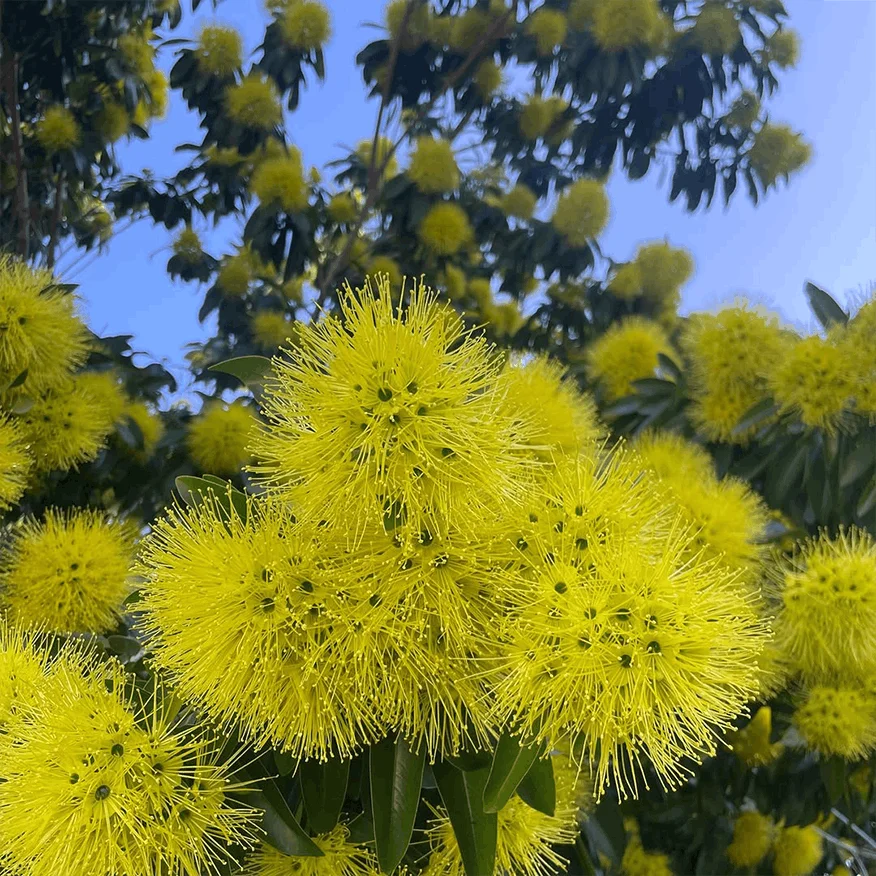
Xanthostemon chrysanthus (Golden Penda)
Native to the coastal forests and riparian zones of northeast Queensland, the Golden Penda is a striking evergreen tree. It is widely recognised for its large, glossy leaves and vibrant yellow-gold blooms. These spectacular flowers appear from summer through autumn, turning the tree into a magnet for birds, bees, butterflies, and other beneficial insects.
Landscape Applications and Benefits
The Golden Penda grows up to 15 metres tall and 12 metres wide, forming a beautiful oval shape. This moderately fast-growing tree adapts well to various conditions. It tolerates both salt and wind, and it thrives in loamy, sandy, or clay loam soils.
Because it requires low maintenance and moderate water, the Golden Penda is perfect for urban streetscapes and playground environments. It provides essential ecosystem services, including deep shading, privacy screening, and crucial habitat provision. Its high pollution tolerance makes it an incredibly versatile and impactful choice for modern landscape projects. You can even use it effectively in large container plantings.
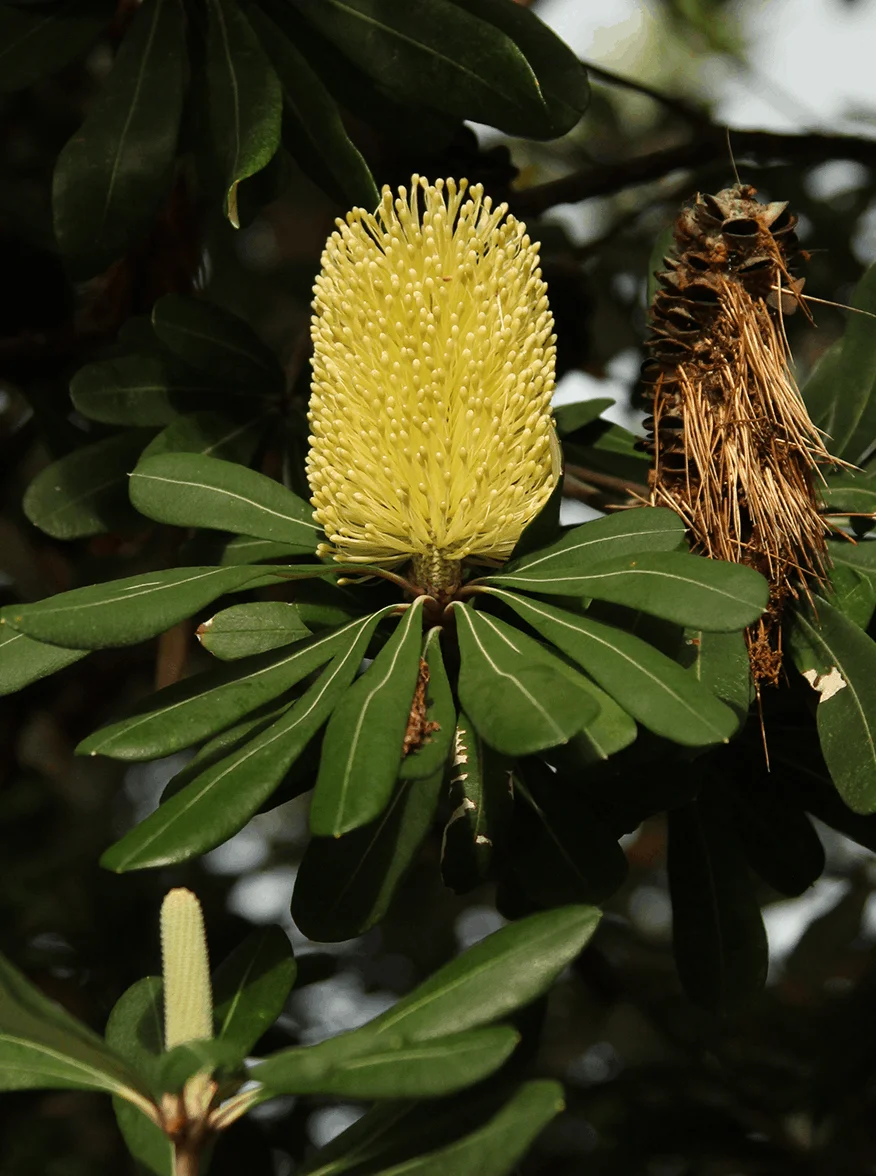
Banksia integrifolia (Coast Banksia)
The Coast Banksia is a resilient, evergreen tree native to the coastal regions of New South Wales and Queensland. It brings a striking presence to coastal landscapes and urban gardens alike. The tree features matte dark green leaves that reveal a beautiful silvery-white underside when the wind blows. From autumn through to spring, it produces distinctive yellow flower spikes that attract a flurry of birds, bees, and butterflies.
Landscape Applications and Benefits
Reaching up to 15 metres in height with a 6 metre spread, the Coast Banksia develops a naturally rounded, slightly irregular form. It boasts an exceptional level of adaptability. The tree comfortably tolerates light frosts, drought conditions, salty sea air, and a wide variety of soils, including saline and clay types.
Its low water requirements make it an excellent candidate for low-intervention planting schemes. Landscape architects frequently utilise the Coast Banksia for coastal revegetation, habitat restoration, and durable streetscapes. It provides excellent wind protection and shade, making it a highly functional addition to any landscape where resilience and biodiversity remain top priorities.
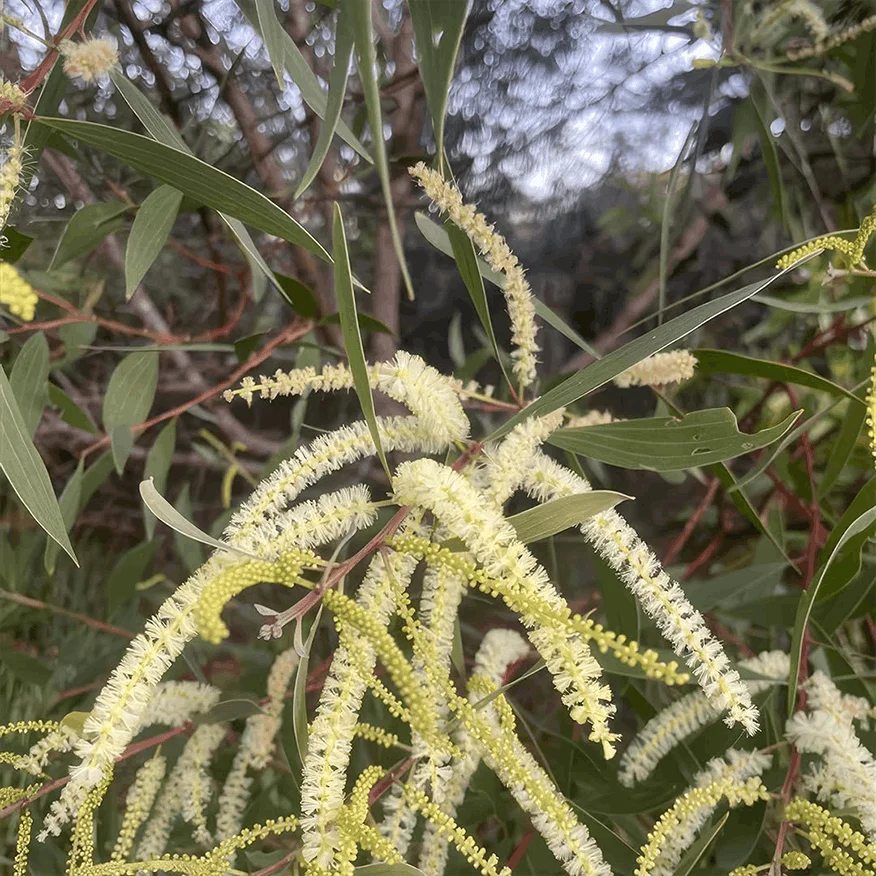
Acacia concurrens (Black Wattle or Curracabah)
Native to the coastal and subcoastal regions of Queensland and northern New South Wales, the Black Wattle is a fast-growing, nitrogen-fixing tree. It features an upright form, smooth grey bark, and bright green, sickle-shaped leaves. This unique foliage gives the tree a refined and textural presence in both natural and highly structured urban settings.
Landscape Applications and Benefits
The Black Wattle typically reaches heights of 6 to 10 metres. During winter and spring, it produces abundant, golden-yellow rod-like flower clusters that sustain local pollinators. This tree significantly improves soil health by fixing nitrogen.
It stabilises slopes and thrives in poor, compacted, or disturbed soils. We often specify the Black Wattle for revegetation zones, erosion control, and roadside planting. It establishes quickly and develops dense foliage, supporting local biodiversity while helping degraded landscapes recover faster.
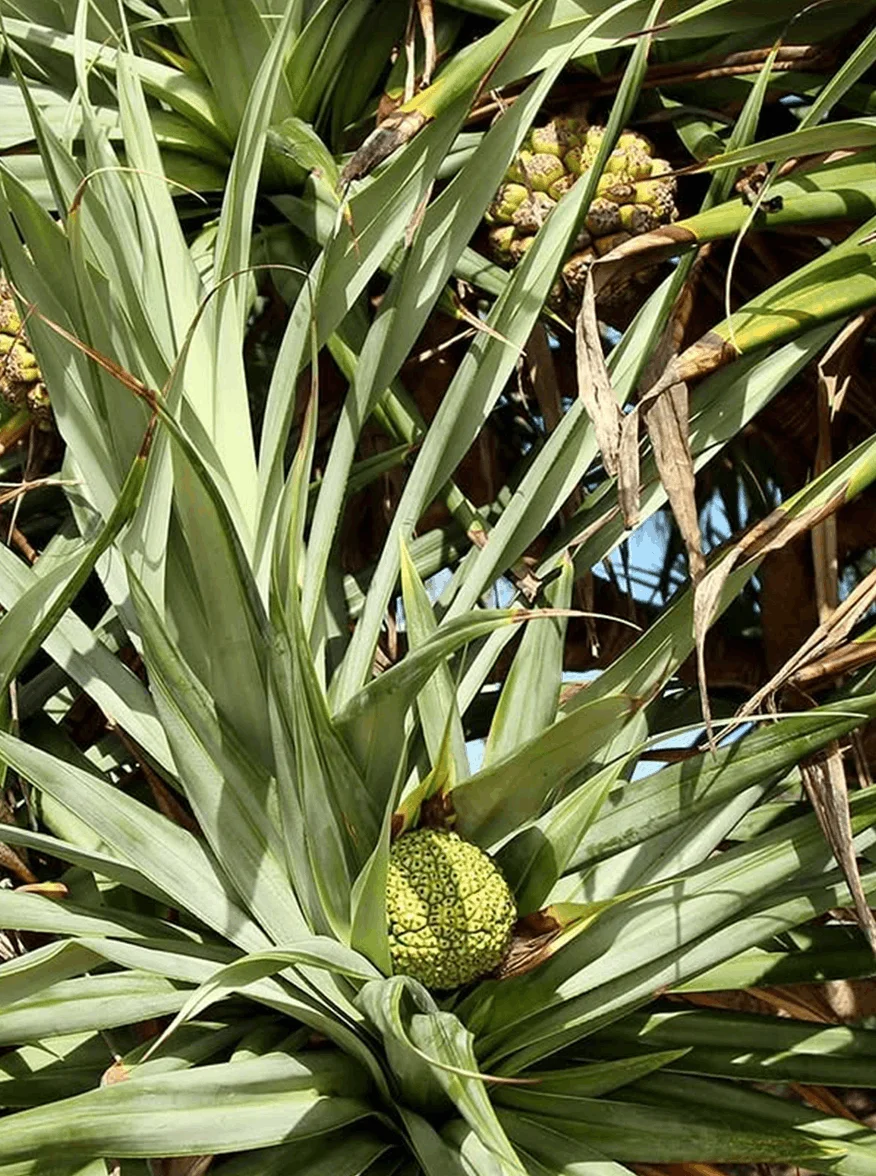
Pandanus tectorius (Screw Pine)
The Screw Pine is a slow growing, highly architectural native tree found primarily in the coastal lowlands of eastern Australia. It is widely celebrated for its bold structural form and incredible resilience in exposed coastal environments. The tree features long, spirally arranged leaves that emerge in dramatic tufts, giving it a distinctly tropical appearance.
Landscape Applications and Benefits
Growing up to 12 metres tall, the Screw Pine develops fascinating aerial roots that provide both architectural interest and shelter for small coastal fauna like crabs. It produces small, cream-coloured blooms in the spring and summer, followed by large, segmented fruits that offer immense ecological value.
This tree performs exceptionally well in harsh, exposed sites where wind, drought, and heavy salt spray limit the survival of other species. We highly value the Screw Pine for coastal stabilisation and low-maintenance garden designs. It serves as a stunning feature tree when you need bold form combined with uncompromising environmental resilience.
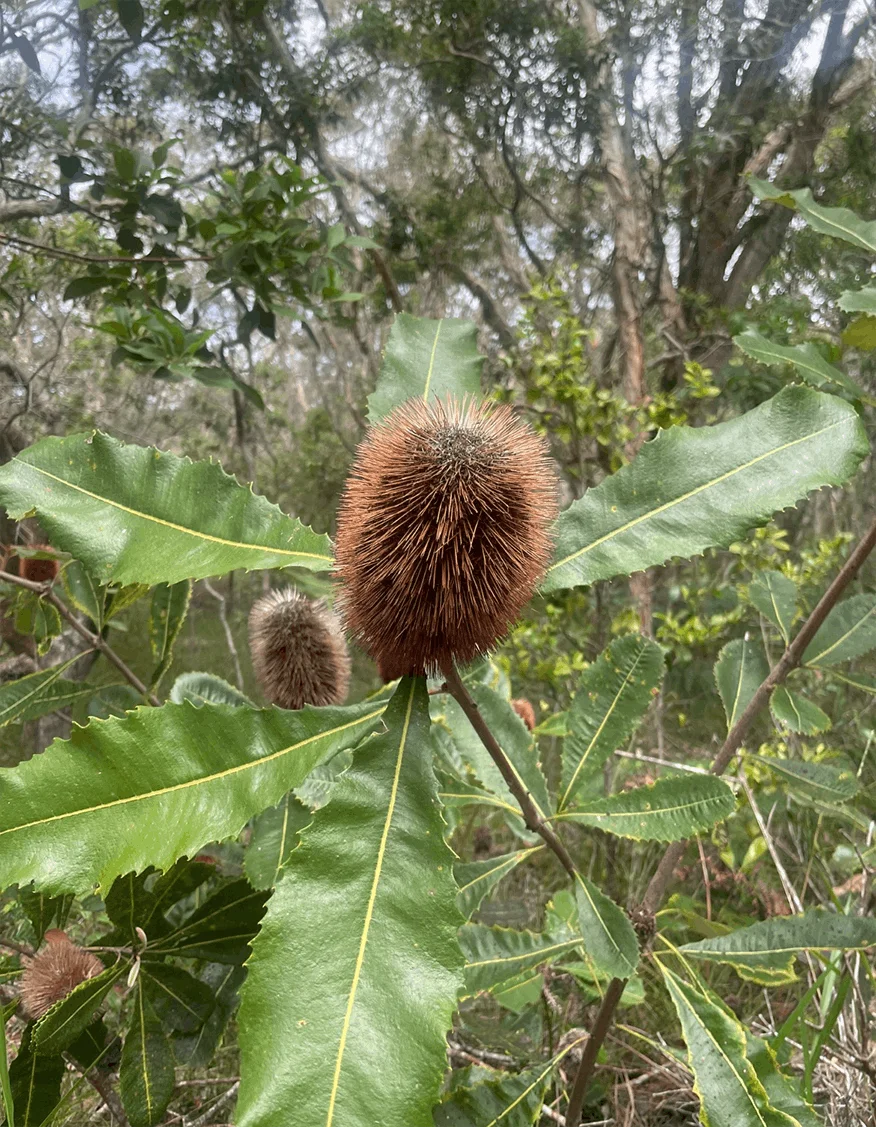
Banksia robur (Swamp Banksia)
The Swamp Banksia is a bold, fast-growing shrub native to coastal New South Wales and Queensland. It earns admiration for its large, serrated foliage and striking flower spikes that bring structure and seasonal colour to diverse landscapes. The distinctive flower heads emerge bluish-green in autumn and mature to a vibrant yellow-green through the winter months.
Landscape Applications and Benefits
Typically reaching around 2 metres high and wide, this dense evergreen shrub thrives in sandy to loamy soils. Unlike many native plants, it prefers wetter areas and bog gardens. It requires moderate to high water but shows excellent resilience to light frost, salt exposure, and even fire.
During the cooler months, the Swamp Banksia provides critical nectar for birds, bees, butterflies, and flying foxes. It requires very little maintenance while offering high ecological value. We frequently use it for grouped plantings, erosion control, and wetland restoration projects where soil stability and habitat diversity are essential.
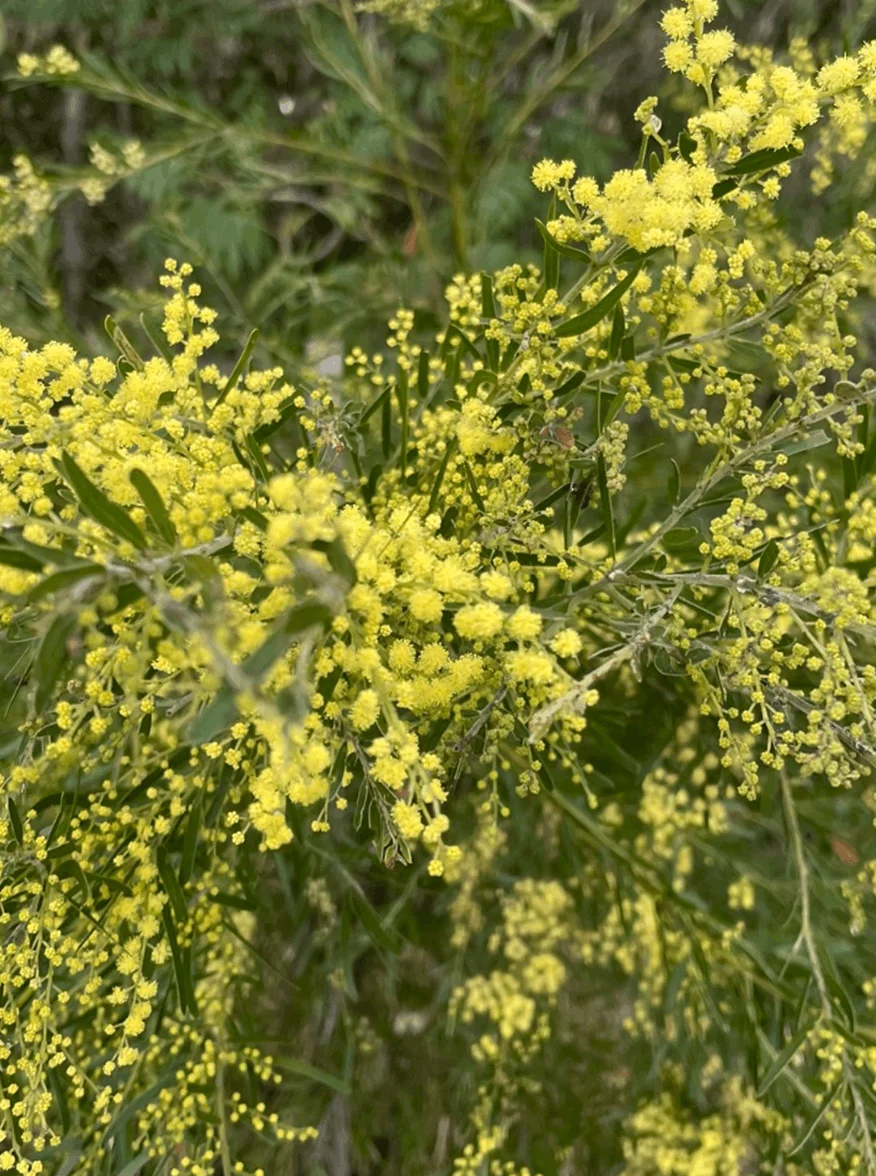
Acacia fimbriata (Brisbane Wattle)
The Brisbane Wattle is a fast-growing, fine-foliaged shrub or small tree native to south-east Queensland and northern New South Wales. It features delicate, fern-like light green foliage that creates a beautiful, graceful weeping silhouette. In late winter to early spring, the plant bursts into a massive display of golden-yellow, ball-shaped flowers.
Landscape Applications and Benefits
Reaching around 6 metres in height, this riparian species adapts well to a range of soil types in full sun or part shade. Once established, it becomes highly drought tolerant.
The Brisbane Wattle fixes nitrogen in the soil, enhancing local fertility and supporting broader plant community health. It also possesses fire-retardant properties. We love using this plant for informal screening, stabilising banks, or serving as a soft, seasonal focal point in residential gardens. Its rapid growth makes it a highly practical option for low-maintenance native gardens and rapid revegetation work.
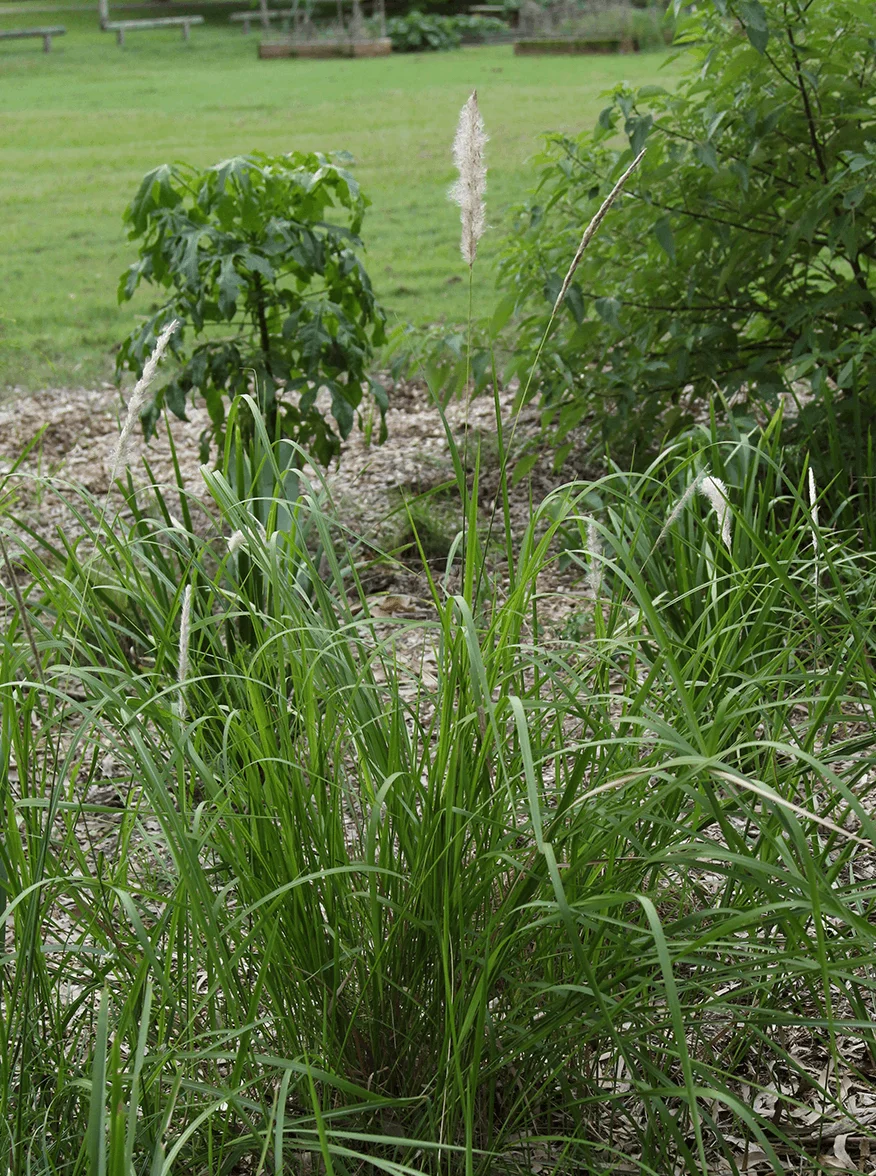
Imperata cylindrica (Blady Grass)
Blady Grass is a hardy, fast-growing clumping grass valued for its supreme versatility. Its narrow, finely toothed leaves taper to a sharp point and contain silica crystals, giving the plant a tough texture and providing year-round evergreen structure to the garden.
Landscape Applications and Benefits
Forming dense clumps around 1.2 metres high, Blady Grass is an outstanding choice for erosion protection along steep banks. It produces delicate white blooms from September through February, attracting local butterfly populations.
This adaptable species thrives in full sun to part shade and easily tolerates drought and wind exposure. It holds deep cultural significance, as Indigenous communities traditionally used its leaves for weaving and as a medicinal spice. We frequently incorporate Blady Grass into large-scale restoration projects, riparian plantings, and bold container gardens.
The Importance of Native Plants in Sustainable Landscaping
Integrating Australian native plants into your landscape design goes far beyond simple aesthetics. These plants evolved specifically to thrive in our unique, often harsh climate. By choosing native species, you drastically reduce the need for artificial fertilisers, chemical pesticides, and excessive irrigation.
Native plants form the foundational building blocks of our local ecosystems. They provide the exact types of nectar, pollen, and shelter that our native birds, bees, and wildlife require to survive. When you plant species like the Golden Penda or the Coast Banksia, you actively contribute to the health of your local environment while creating a beautiful, low-maintenance outdoor space.
This post highlights just a fraction of the incredible species we have explored in our Australian Native Spotlight series. We have many more exceptional plants to share with you. Stay tuned for Part 2, where we will dive into the Orthosiphon aristatus (Cat Whiskers), Buckinghamia celsissima (Ivory Curl Tree), and Harpullia pendula (Tulipwood), and several other landscape favourites.
UP NEXT
