

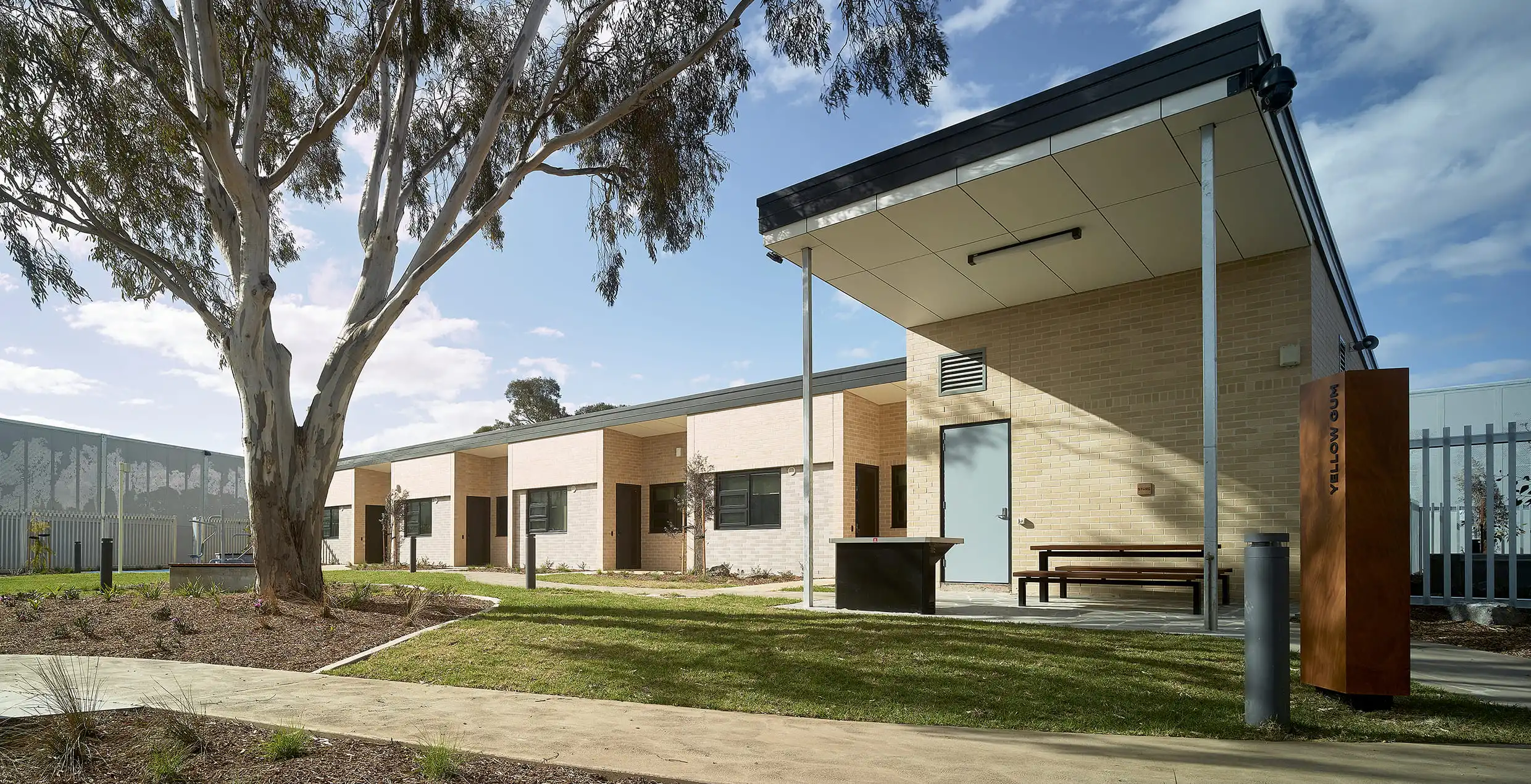
While mental health challenges affect people across all parts of society, they are especially pronounced within prison environments.
Landscape architects have tremendous agency to influence the psychological experience of these environments and support rehabilitation. A subtle spatial decision or thoughtfully selected material in a prison landscape can coax attention away from feelings of anxiety, shame and depression, towards moments of fascination, reflection and contented calm.
Nature as a Tool for Rehabilitation
The physical experience of prison can reinforce feelings of both physical and mental confinement. Prison design has come a long way since the days of damp, rat-infested cells, yet, in fulfilling the necessary requirements for safety, security and surveillance, the built environment can still feel overwhelming, lifeless and restrictive. If rehabilitation is an objective of imprisonment, it is vital that we consider the environments we create through this psychological lens.
Landscape architecture is often seen as a luxury item in the budget, non-essential to the successful delivery of a corrections project. Yet the discipline is uniquely situated in that it deals with the external, the outside, the space we occupy on the land and beneath the sky. There are qualities of nature that can have profound effects on our psychology, and no wonder: nature is where humans belong. Through the choreography of space, materiality, lighting, planting, prospect and refuge, landscape architecture can harness this relationship and aid the rehabilitation process. In this context, landscape architecture is not a luxury, but an essential part of the rehabilitative environment.
Understanding Restorative Environments
There is considerable crossover and shared sentiment between landscape architecture and psychology, especially with respect to the benefits of exposure to nature. Widely cited in psychological research is Rachel and Stephen Kaplan’s Attention Restoration Theory (1995), which explores how nature can provide relief from the fatigue caused by ‘directed attention’ in our everyday lives.
Despite being nearly 40 years old, the theory couldn’t be more relevant today. There is a sense of stress-inducing freneticism and relentlessness that comes with our need to be productive and remain in a constant state of learning and improving. The vital role of nature in alleviating this stress and restoring our attention feels increasingly evident.
The framework describes four characteristics of restorative environments, each with great potential for application in landscape architecture. Within the restrictive context of a prison environment, these qualities take on particular significance.
Based on the theory, the restorative qualities of a landscape sit within four broad categories:
- Extent – The coherence, vastness and a level of immersion that allows the mind room to explore without hitting dead ends.
- Soft Fascination – When one’s attention is effortlessly captured by natural elements such as flowing water, rustling leaves and majestic clouds.
- Compatibility – The degree to which the landscape responds to our personal needs and goals, allowing us to do what we want without additional effort.
- Being Away – The feeling of separation from sources of stress and pressure, which can be mental as well as physical.
Applying Restorative Design in Prison Landscapes
It may seem that many of these ideals are difficult to achieve within the constraints of a prison landscape. There are, however, methods we can employ to maximise the benefits of nature without compromising security or safety.
The physical limitations of prison environments pose challenges to these ideals, and even directly contradict them in some respects. It would take a special individual to feel a sense of ‘vastness’ within the confinement of a cell, for example. This makes outdoor courtyards incredibly valuable, not only in providing space for pacing, sport and other physical activities, but also for providing glimpses outward. Simply being able to see clouds in the sky, a distant forested hillside or hear the trickling of water can provide stimulus for the mind and create a sense of extent and immersion beyond the immediate confines of the space. In an environment where physically ‘being away’ is impossible, landscape can provide opportunities to be away psychologically, even if only momentarily.
Research referenced in the University of Birmingham’s Design Principles for Prison Landscapes – Security, Biodiversity and Wellbeing similarly identifies the value of views to nature for prisoner wellbeing. These passive recreational opportunities can be incorporated with a little thought through considered site planning and courtyard design.
Balancing Security and Wellbeing in Prison Landscape Design
When providing a communal space for many individuals, it can be challenging, and perhaps impossible, to suit everyone’s needs. The desire to socialise or to withdraw. To exercise or relax. Providing opportunities for both ends of each spectrum is one way we can create greater compatibility between the environment and the people who use it.
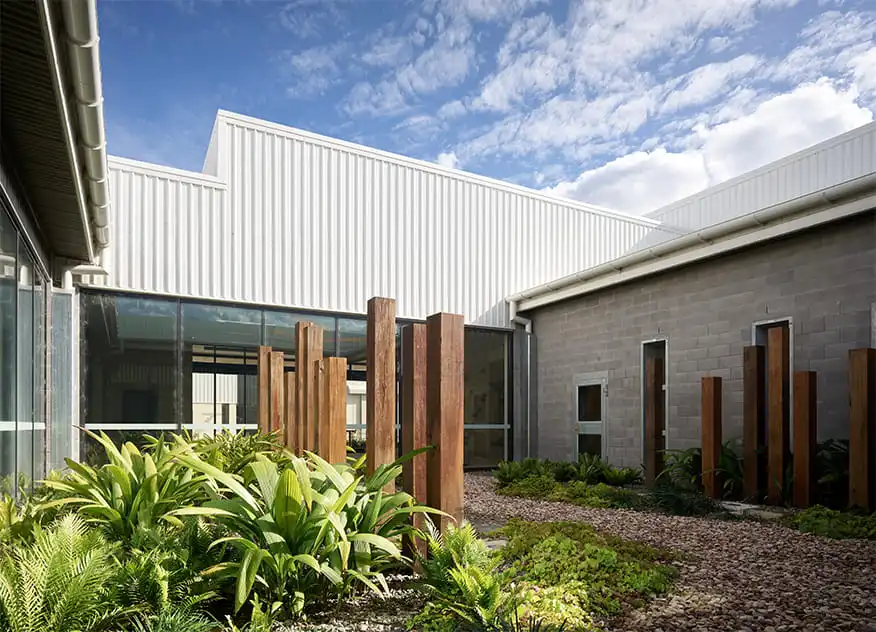
Correctional centres must have appropriate restrictions on behaviour, access and supervision, which often require highly utilitarian design outcomes focused on safety and control. These requirements, however, do not have to come at the cost of rehabilitation. With an understanding of these psychological principles, landscape architects have a real opportunity to work within these constraints rather than against them. Safety and rehabilitation need not be competing objectives.
Through considered landscape design, even highly controlled environments can provide moments of fascination, psychological escape and calm. In this context, landscape is not a luxury. It is part of the rehabilitative environment.
About the Author
Jimmy Futcher is a Landscape Architect at Guymer Bailey with a particular interest in the relationship between people, place and wellbeing. His work explores how thoughtfully designed environments can influence behaviour, support mental health and create more meaningful human experiences.
Frequently Asked Questions
Why is nature important in correctional environments?
Exposure to nature has been shown to support mental wellbeing, reduce stress and provide restorative experiences. In correctional settings, access to natural elements can help counteract the psychological impacts of confinement and contribute to rehabilitation outcomes.
What is Attention Restoration Theory?
Developed by Rachel and Stephen Kaplan, Attention Restoration Theory suggests that natural environments help restore mental fatigue caused by prolonged concentration and directed attention. The theory identifies four characteristics of restorative environments: Extent, Soft Fascination, Compatibility and Being Away.
How can landscape architecture support rehabilitation in prisons?
Landscape architecture can create opportunities for reflection, stress reduction and positive engagement with nature through courtyards, planting, views to surrounding landscapes, outdoor recreation areas and spaces that support different social and behavioural needs.
Can prison landscapes improve wellbeing without compromising security?
Yes. Thoughtful landscape design can work alongside operational and security requirements. Strategic site planning, courtyard design, planting and visual connections to nature can increase wellbeing while maintaining safety, supervision and control.
What are the four characteristics of a restorative environment?
According to Attention Restoration Theory, restorative environments provide:
- Extent – A sense of immersion and mental exploration.
- Soft Fascination – Effortless engagement with natural elements.
- Compatibility – Support for users’ needs and activities.
- Being Away – Psychological or physical separation from stressors.
How do outdoor courtyards benefit correctional facilities?
Outdoor courtyards provide opportunities for physical activity, recreation and connection to nature. They can also create a sense of openness and psychological relief by offering views of the sky, landscape and other natural elements beyond the immediate prison environment.
Is landscape architecture a luxury in correctional projects?
While landscape elements are sometimes viewed as non-essential, research and design practice increasingly demonstrate that outdoor environments contribute to wellbeing, rehabilitation and operational outcomes. In this context, landscape architecture forms an important part of the rehabilitative environment rather than a discretionary enhancement.
What role does nature play in creating more humane correctional environments?
Nature can provide moments of calm, fascination and psychological escape within otherwise restrictive settings. Through carefully designed outdoor spaces, correctional facilities can support dignity, wellbeing and rehabilitation while still meeting their core operational requirements.
References
Kaplan, S. (1995). The restorative benefits of nature: Toward an integrative framework. Journal of Environmental Psychology, 15(3), 169–182. https://doi.org/10.1016/0272-4944(95)90001-2
Widdop, E., Moran, D., & Sadler, J. (2025). Design principles for prison landscapes: Security, biodiversity and wellbeing. University of Birmingham. https://www.greenprison.co.uk
UP NEXT
